Microvan Inc. · UBC Launch Pad · 2023–24
Taking a live truck auction online for 4,700 bidders
I designed the profile, watchlist and notifications for Microvan's first online auction site so their customers always know their bids standing.
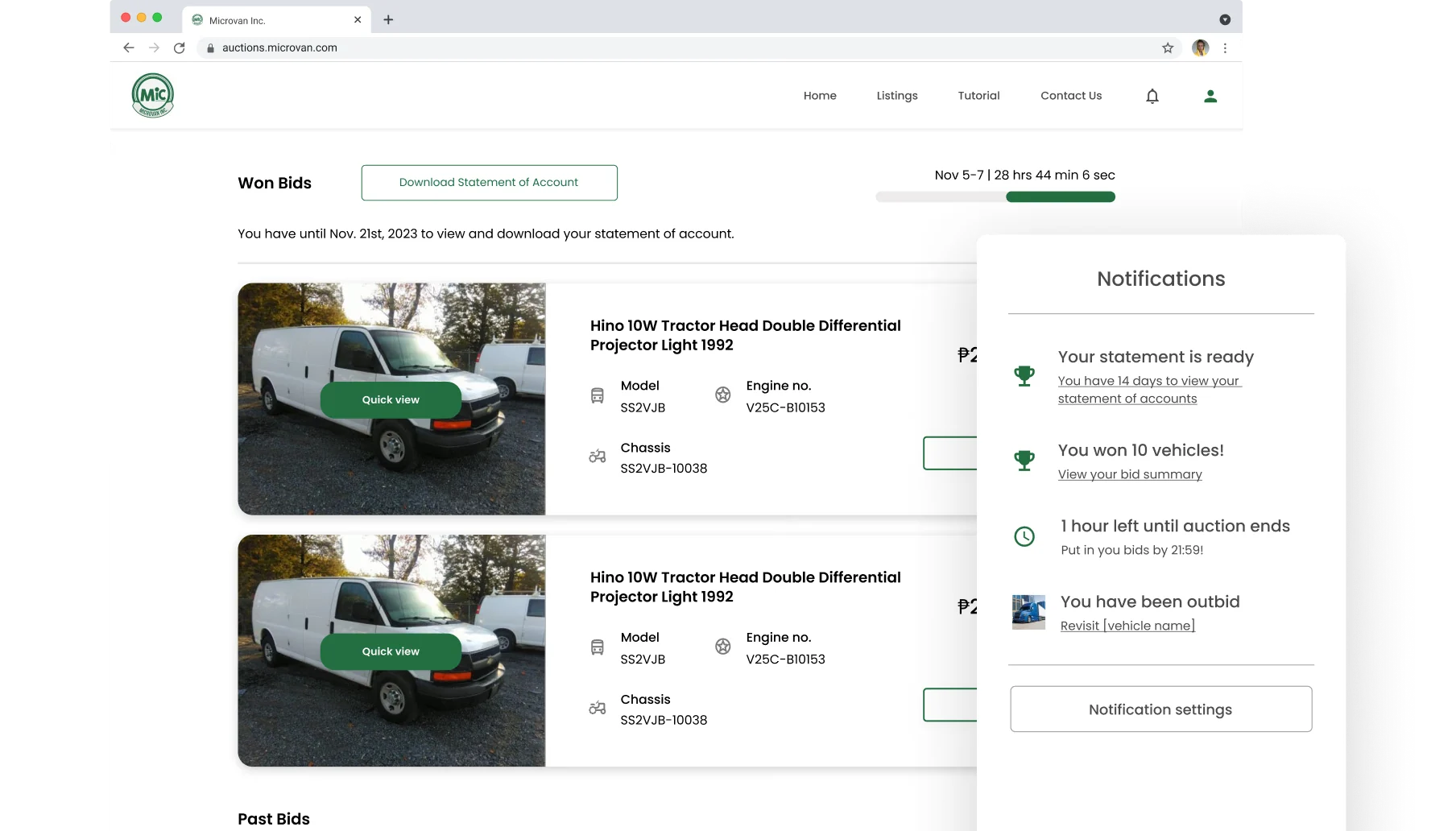
Owned profile & notifications
5 developers
Sep 2023 – Apr 2024
How might we make online bidding clear enough that bidders never have to ask staff where they stand?
The auctions stopped, and competitors moved online
Microvan sells new and used trucks and construction machinery in Subic, Philippines. It ran in-person auctions every month until the pandemic paused them. By the time it was ready to restart, competitors were already taking bids online.
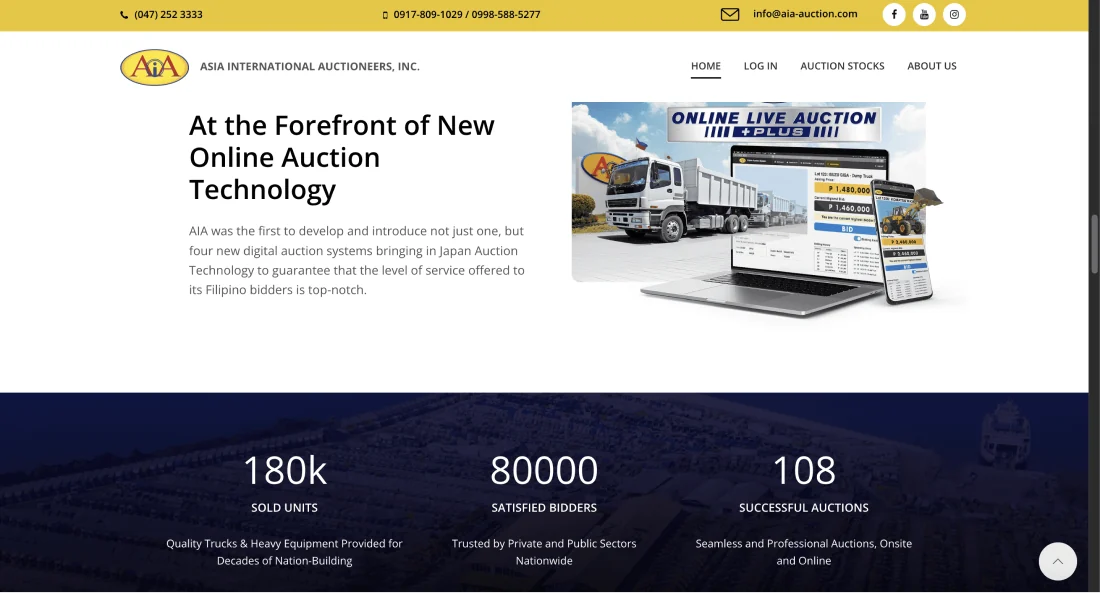
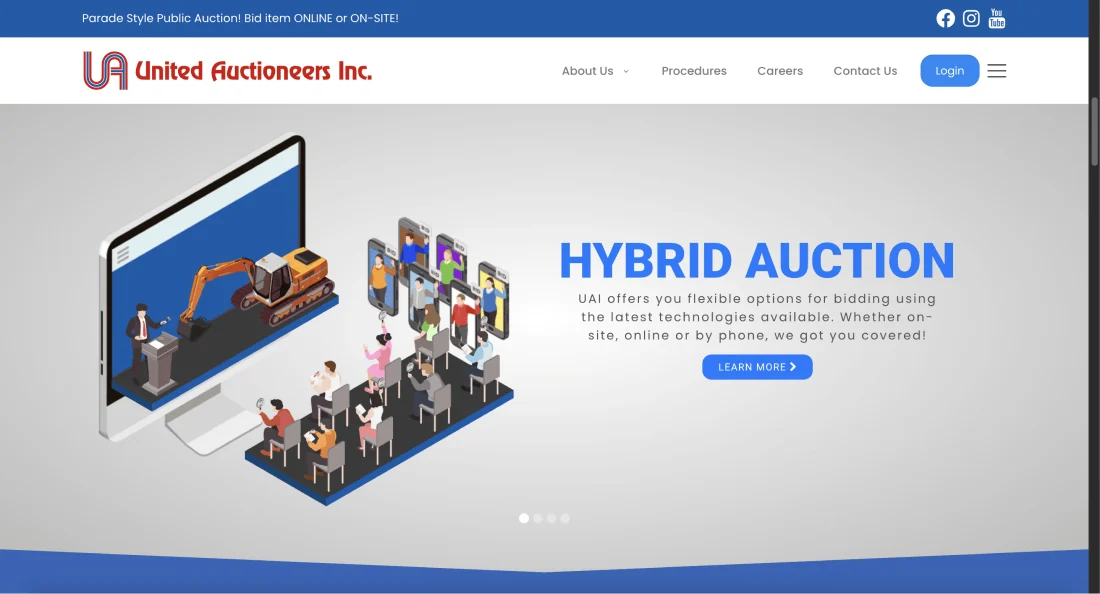
At live auctions, bidders lost track of their own bids
With no auctions running, we couldn't reach bidders directly. Instead, we interviewed Microvan's VP about what went wrong for bidders at past live auctions. Three problems came up again and again.
Too many lots to keep track of
Bidders moved between lots and flipped through a printed bid book with no photos. It was easy to miss items or forget what they'd bid on.
Statements meant asking staff, every hour
Bidders had to request their Statement of Account in person. Staff fielded these requests every few hours and at the end of every auction.
No updates, so people left
Nobody told bidders when they were outbid or when their items came up. Many glanced at the bid book, got frustrated, and walked out.
Keep bidders in the loop at every step
Our team mapped the live auction journey, then rebuilt it for the web. My part covered the moments where bidders used to get lost.
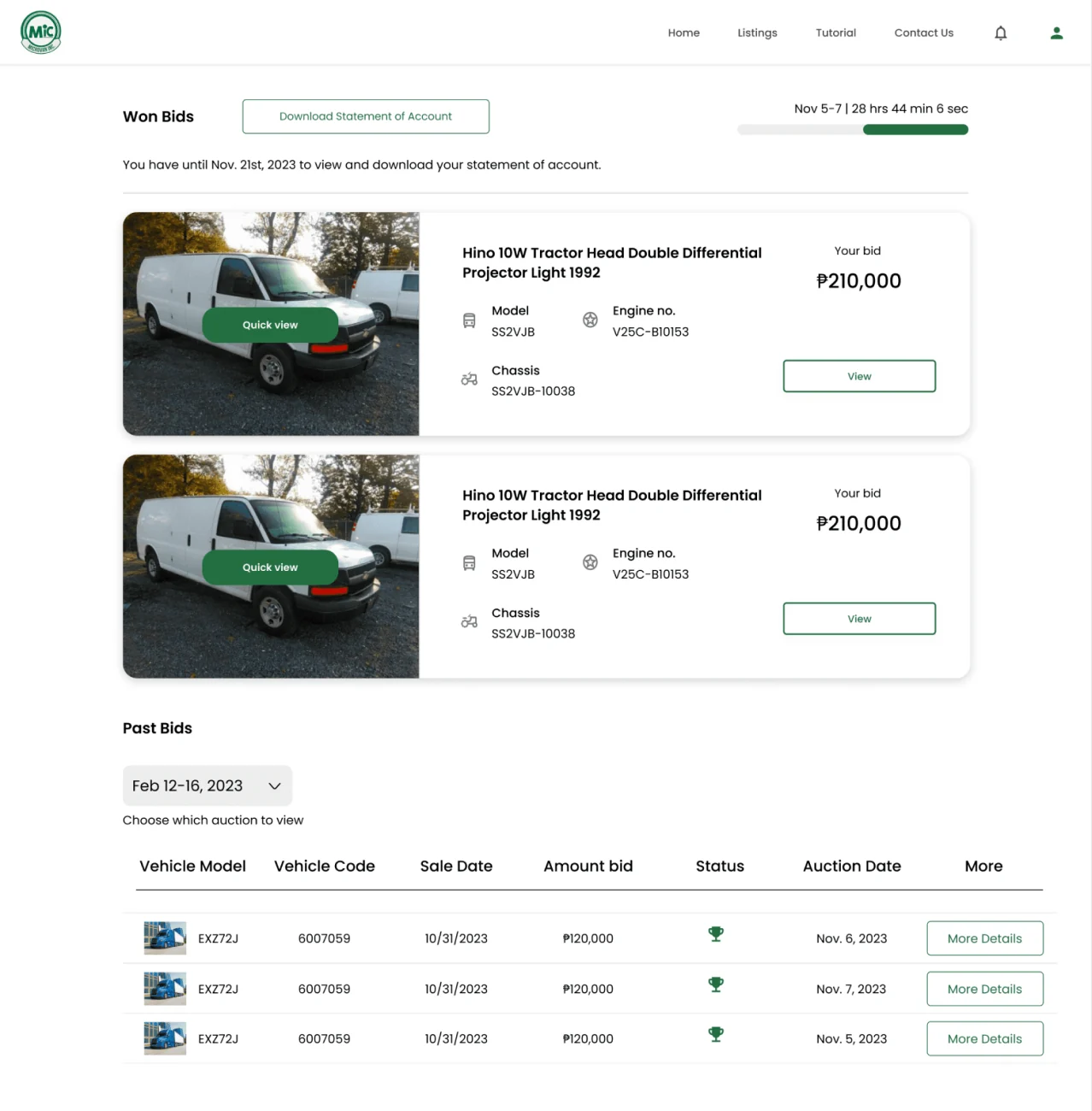
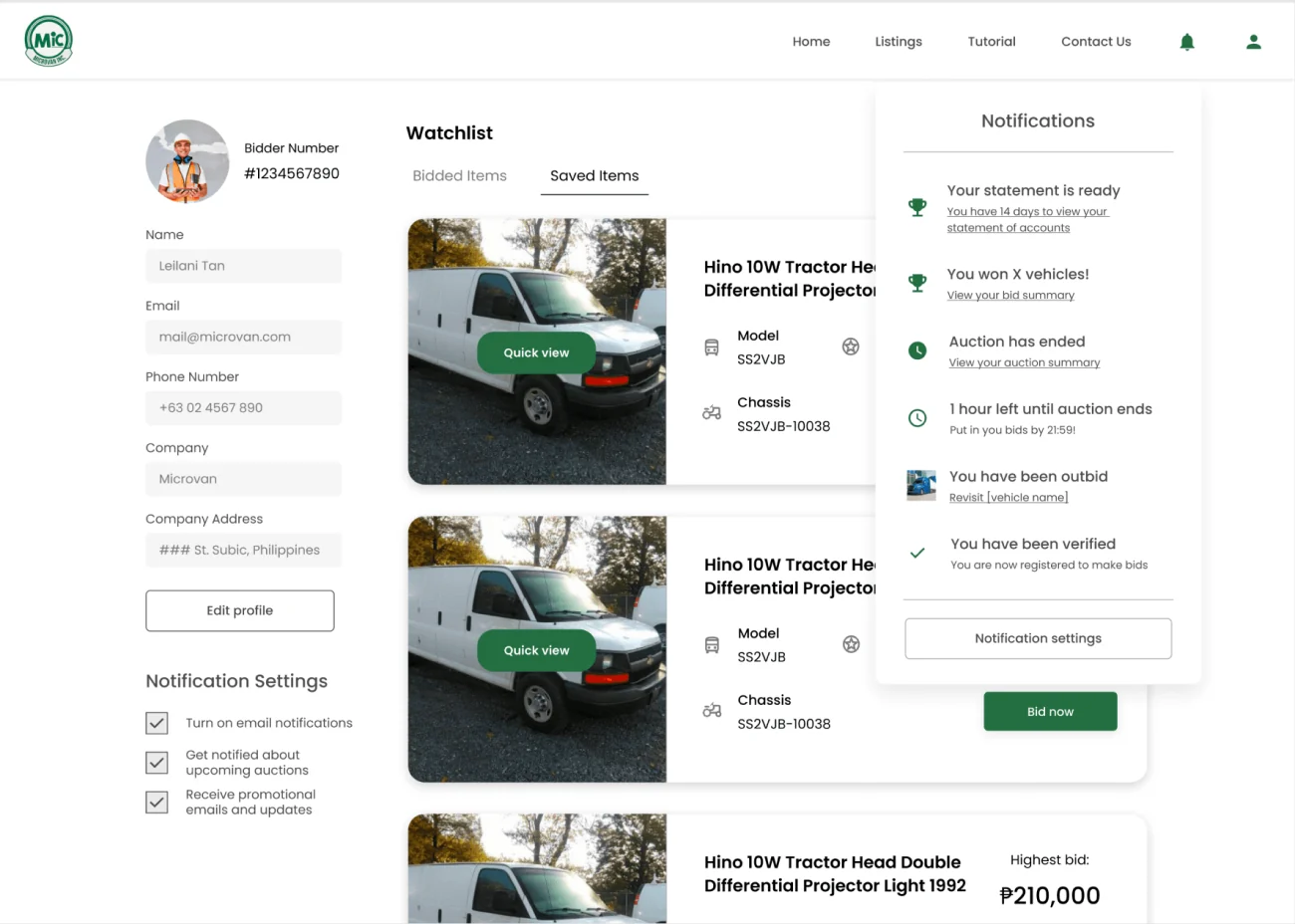
Three decisions shaped the experience
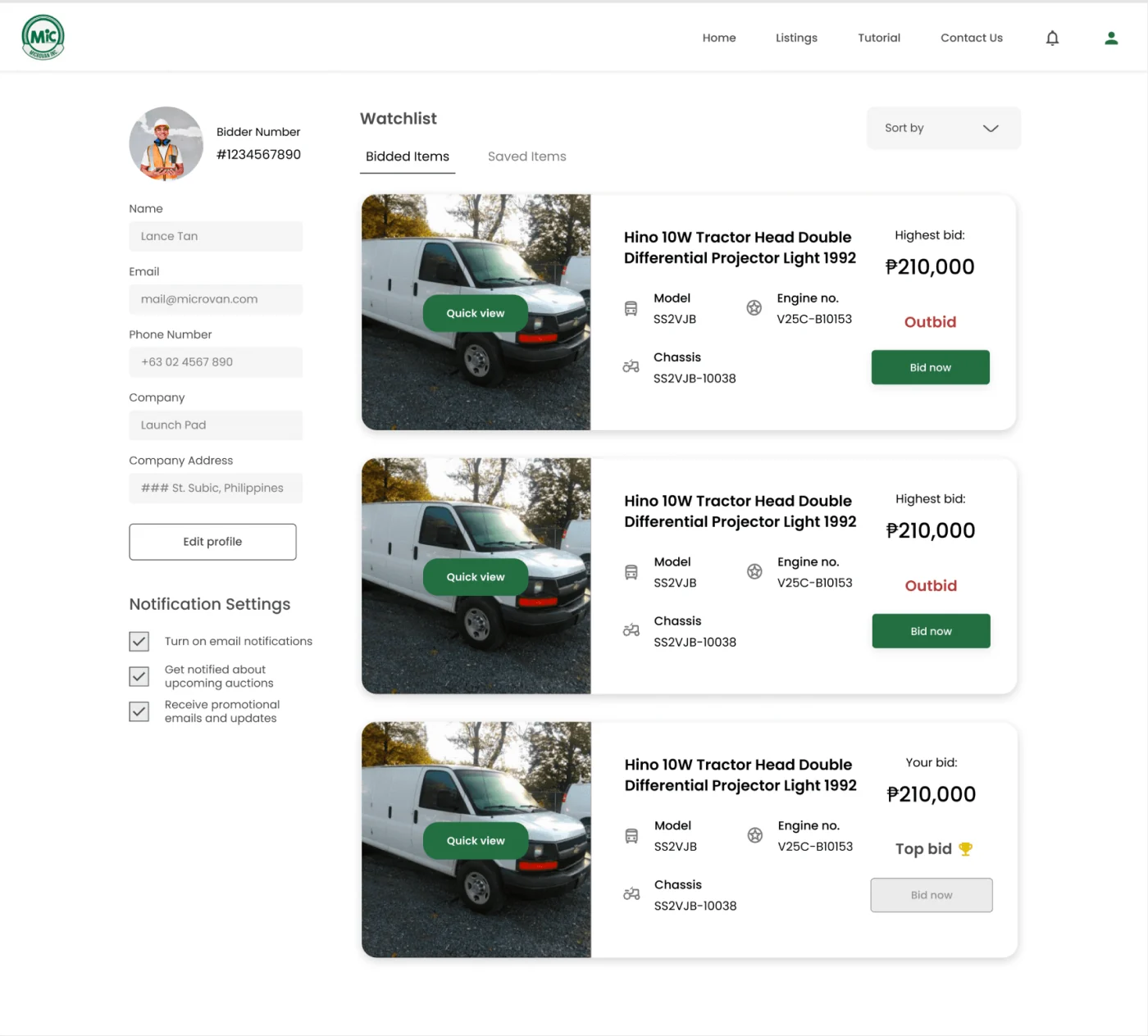
Show every item, and separate bids from saves
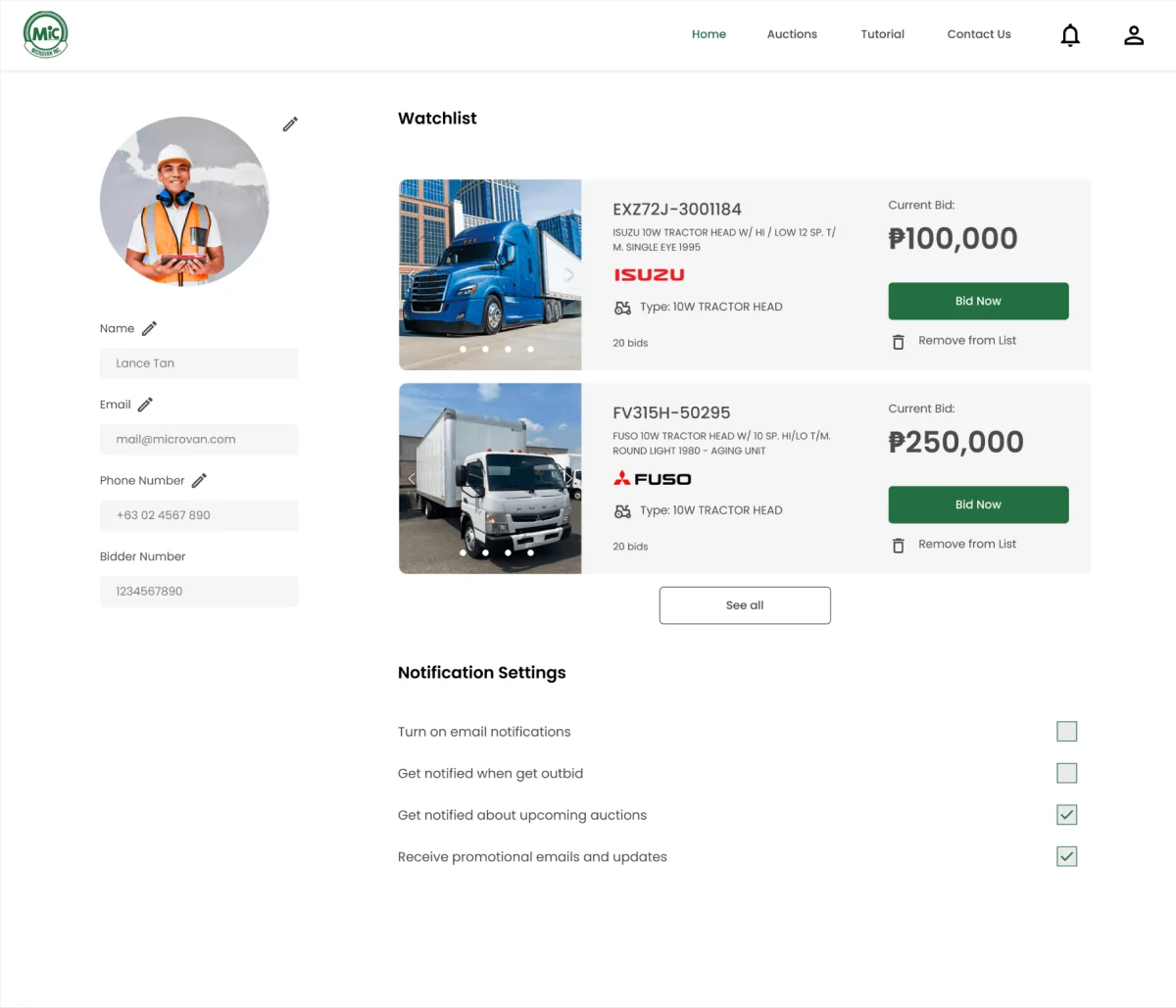
My first watchlist showed two items and a "See all" button, with notification settings underneath. But serious bidders follow dozens of lots, and items they'd bid on were mixed in with items they were just eyeing.
Lead with wins, not every bid
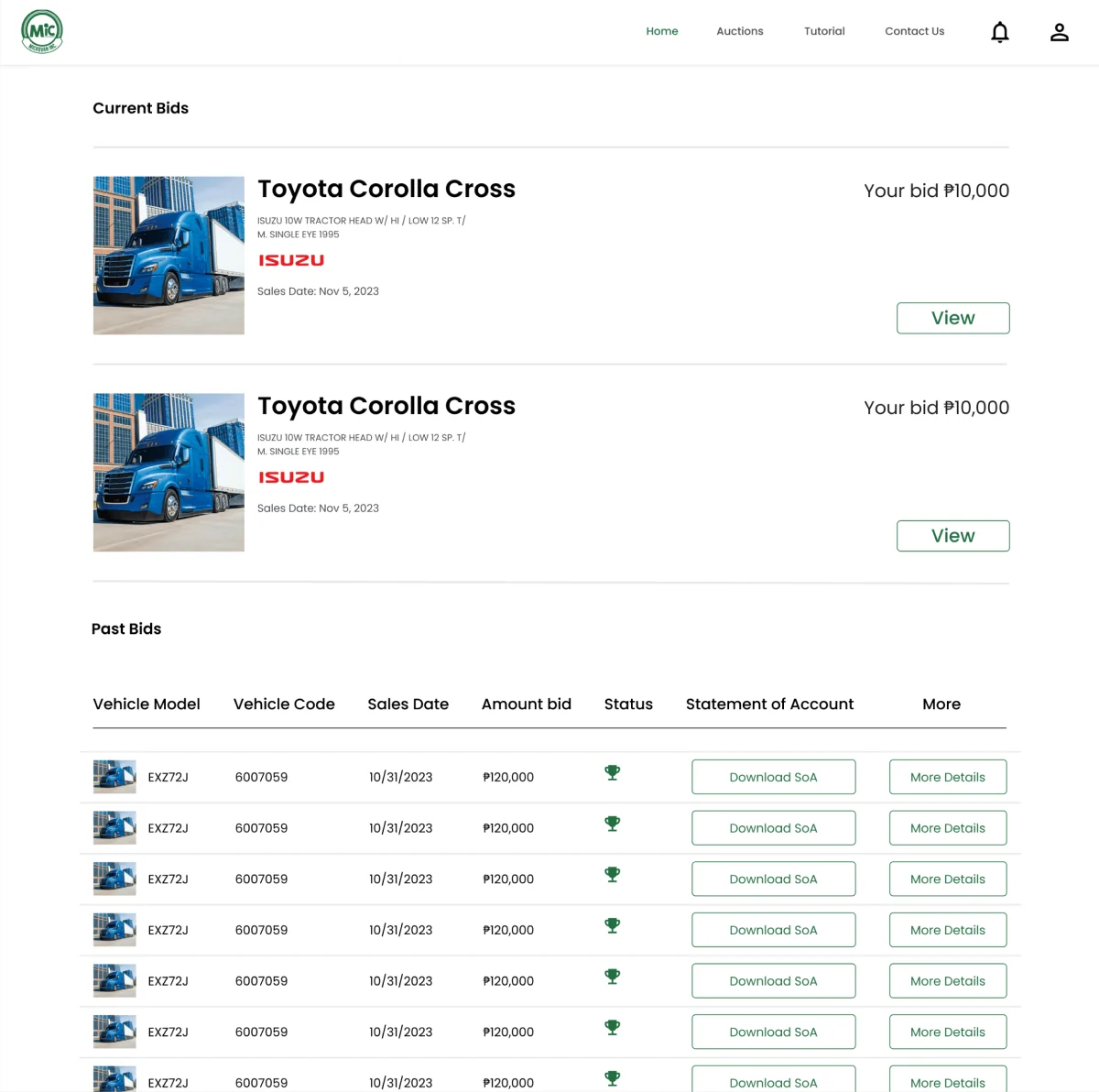
The first version listed "Current Bids" above a long table of every past bid, each with its own statement. But wins are what come out of a bidder's deposit, and Microvan only plans 1–2 online auctions a year.
Answer the question before it's asked
Most staff requests came down to two questions: "Am I still winning?" and "Where's my statement?" Online, bidders aren't even in the room to ask.
Scoped together, designed solo, reviewed often
The four of us set the scope, features and sketches together, then each owned a set of flows. We traded feedback throughout to keep components consistent.
- TEAMStakeholder interviewLive auction flow, gaps, bidder friction
- TEAMScope & sketchesProduct goals, features, low-fi layouts
- MEProfile & notificationsWatchlist, bid history, alerts
- CLIENT2 feedback roundsIterated with Microvan's VP
- TEAMHandoffAnnotated flows for 5 developers
Built to bring bidders back, and keep them bidding
Next, we planned to track a statement accessibility score (1–5) and satisfaction surveys after the first live auction, and to turn our shared components into a design system.
What I'm taking with me
A stakeholder can stand in for users, carefully
Without bidders to talk to, specific questions about past auctions got us real pain points instead of opinions.
Four designers, one product
My first time on a design team. Regular critique kept our screens consistent, and teammates caught gaps I'd missed.
Design for how the business runs
Knowing Microvan holds only a few auctions a year let me cut bid history down to what bidders actually use.